
The Story
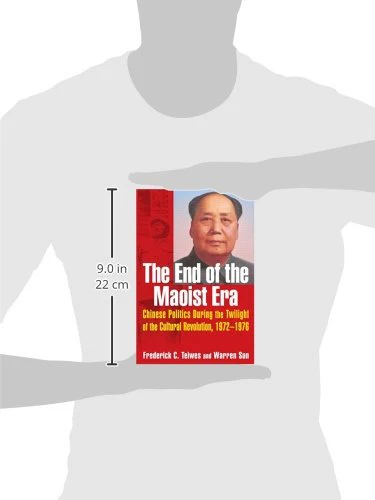
This book launches an ambitious reexamination of the elite politics behind one of the most remarkable transformations in the late twentieth century. As the first part of a new interpretation of the evolution of Chinese politics during the years 197282, it provides a detailed study of the end of the Maoist era, demonstrating Mao's continuing dominance even as his ability to control events ebbed away. The tensions within the 'gang of four,' the different treatment of Zhou Enlai and Deng Xiaoping, and the largely unexamined role of younger radicals are analyzed to reveal a view of the dynamic of elite politics that is at odds with accepted scholarship. The authors draw upon newly available documentary sources and extensive interviews with Chinese participants and historians to develop their challenging interpretation of one of the most poorly understood periods in the history of the People's Republic of China.

Details & Craftsmanship
Every detail has been carefully considered to bring you the perfect product.
Details & Craftsmanship
Every detail has been carefully considered to bring you the perfect product.
Description
This book launches an ambitious reexamination of the elite politics behind one of the most remarkable transformations in the late twentieth century. As the first part of a new interpretation of the evolution of Chinese politics during the years 197282, it provides a detailed study of the end of the Maoist era, demonstrating Mao's continuing dominance even as his ability to control events ebbed away. The tensions within the 'gang of four,' the different treatment of Zhou Enlai and Deng Xiaoping, and the largely unexamined role of younger radicals are analyzed to reveal a view of the dynamic of elite politics that is at odds with accepted scholarship. The authors draw upon newly available documentary sources and extensive interviews with Chinese participants and historians to develop their challenging interpretation of one of the most poorly understood periods in the history of the People's Republic of China.