The Story
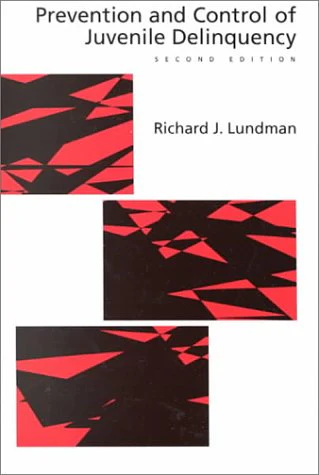
For nearly a decade the most comprehensive account of delinquency prevention and control efforts, this popular textbook has been thoroughly revised to cover all major recent trends in the field. The new edition offers a careful analysis of intensive supervision programs, connecting ISPs with earlier intermediate intervention programs and probing the effectiveness of this entire class of supervision methods. Other chapters have been substantially updated to reflect the transformation of prisonvisitation programs from a scared straight to an equally risky informed straight orientation, and to include Jerome Millers recent account of the Massachusetts experiment in closing training schools. The new edition also provides a richer perspective on patterns of delinquent behavior across time, a clearer link between labeling theory and diversion programs, a stronger assessment of both the incapacitation and deterrence hypotheses, and a more rigorous justification of the authors recommendations for the future, especially of his provocative argument in favor of communitybased treatment for nearly all chronic offenders.As before, the book features indepth discussions of all of the most important programs, stresses the importance of determining if programs meet their goals and outlines the most useful evaluative methods for doing so, and makes imaginative use of description and analysis to build foundations for the future. A standard text for a wide range of courses in departments of sociology, criminology, criminal justice, administration of justice, and law enforcement, Prevention and Control of Juvenile Delinquency now offers students an even more complete, more richly detailed understanding of this complex topic.
Description
For nearly a decade the most comprehensive account of delinquency prevention and control efforts, this popular textbook has been thoroughly revised to cover all major recent trends in the field. The new edition offers a careful analysis of intensive supervision programs, connecting ISPs with earlier intermediate intervention programs and probing the effectiveness of this entire class of supervision methods. Other chapters have been substantially updated to reflect the transformation of prisonvisitation programs from a scared straight to an equally risky informed straight orientation, and to include Jerome Millers recent account of the Massachusetts experiment in closing training schools. The new edition also provides a richer perspective on patterns of delinquent behavior across time, a clearer link between labeling theory and diversion programs, a stronger assessment of both the incapacitation and deterrence hypotheses, and a more rigorous justification of the authors recommendations for the future, especially of his provocative argument in favor of communitybased treatment for nearly all chronic offenders.As before, the book features indepth discussions of all of the most important programs, stresses the importance of determining if programs meet their goals and outlines the most useful evaluative methods for doing so, and makes imaginative use of description and analysis to build foundations for the future. A standard text for a wide range of courses in departments of sociology, criminology, criminal justice, administration of justice, and law enforcement, Prevention and Control of Juvenile Delinquency now offers students an even more complete, more richly detailed understanding of this complex topic.