The Story
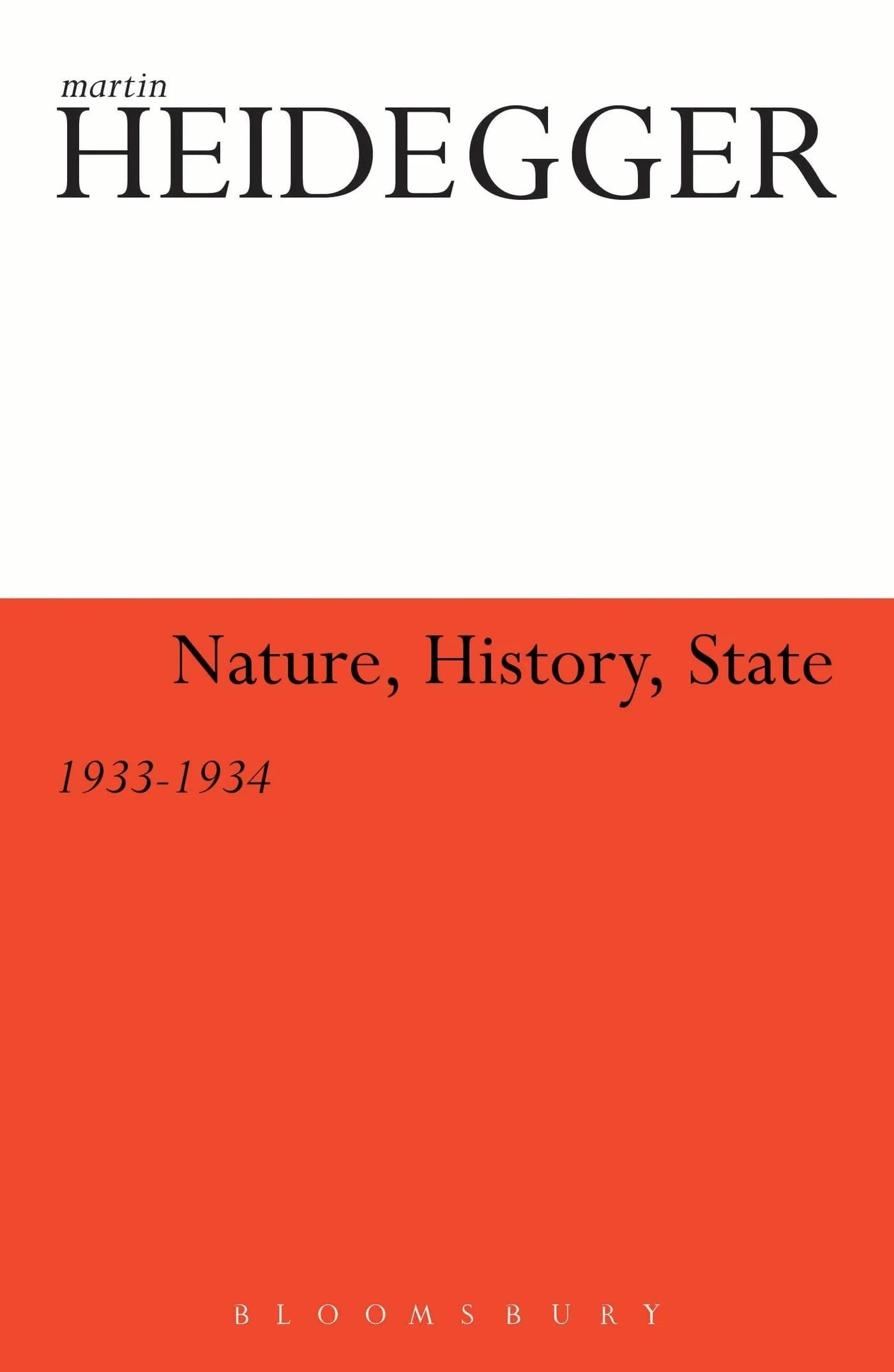
Product Description Nature, History, State: 19331934 presents the first complete Englishlanguage translation of Heideggers seminar On the Essence and Concepts of Nature, History and State, together with full introductory material and interpretive essays by five leading thinkers and scholars: Robert Bernasconi, Peter Eli Gordon, Marion Heinz, Theodore Kisiel and Slavoj iek. The seminar, which was held while Heidegger was serving as National Socialist rector of the University of Freiburg, represents important evidence of the development of Heideggers political thought. The text consists of ten protocols on the seminar sessions, composed by students and reviewed by Heidegger. The first sessions protocol is a rather personal commentary on the atmosphere in the classroom, but the remainder have every appearance of being faithful transcripts of Heideggers words, in which he raises a variety of fundamental questions about nature, history and the state. The seminar culminates in an attempt to sketch a political philosophy that supports the Fhrer state. The text is important evidence for anyone considering the tortured question of Heideggers Nazism and its connection to his philosophy in general. About the Author Martin Heidegger (18891976) is regarded as one of the twentieth centurys most important philosophers. Gregory Fried is Professor of Philosophy at Suffolk University, Boston, USA.Richard Polt is Professor of Philosophy at Xavier University, Cincinnati, USA.Contributors: Marion Heinz, Theodore Kisiel, Peter Eli Gordon, Robert Bernasconi, and Slavoj iek.
Description
Product Description Nature, History, State: 19331934 presents the first complete Englishlanguage translation of Heideggers seminar On the Essence and Concepts of Nature, History and State, together with full introductory material and interpretive essays by five leading thinkers and scholars: Robert Bernasconi, Peter Eli Gordon, Marion Heinz, Theodore Kisiel and Slavoj iek. The seminar, which was held while Heidegger was serving as National Socialist rector of the University of Freiburg, represents important evidence of the development of Heideggers political thought. The text consists of ten protocols on the seminar sessions, composed by students and reviewed by Heidegger. The first sessions protocol is a rather personal commentary on the atmosphere in the classroom, but the remainder have every appearance of being faithful transcripts of Heideggers words, in which he raises a variety of fundamental questions about nature, history and the state. The seminar culminates in an attempt to sketch a political philosophy that supports the Fhrer state. The text is important evidence for anyone considering the tortured question of Heideggers Nazism and its connection to his philosophy in general. About the Author Martin Heidegger (18891976) is regarded as one of the twentieth centurys most important philosophers. Gregory Fried is Professor of Philosophy at Suffolk University, Boston, USA.Richard Polt is Professor of Philosophy at Xavier University, Cincinnati, USA.Contributors: Marion Heinz, Theodore Kisiel, Peter Eli Gordon, Robert Bernasconi, and Slavoj iek.