Original: $41.23
-70%$41.23
$12.37The Story
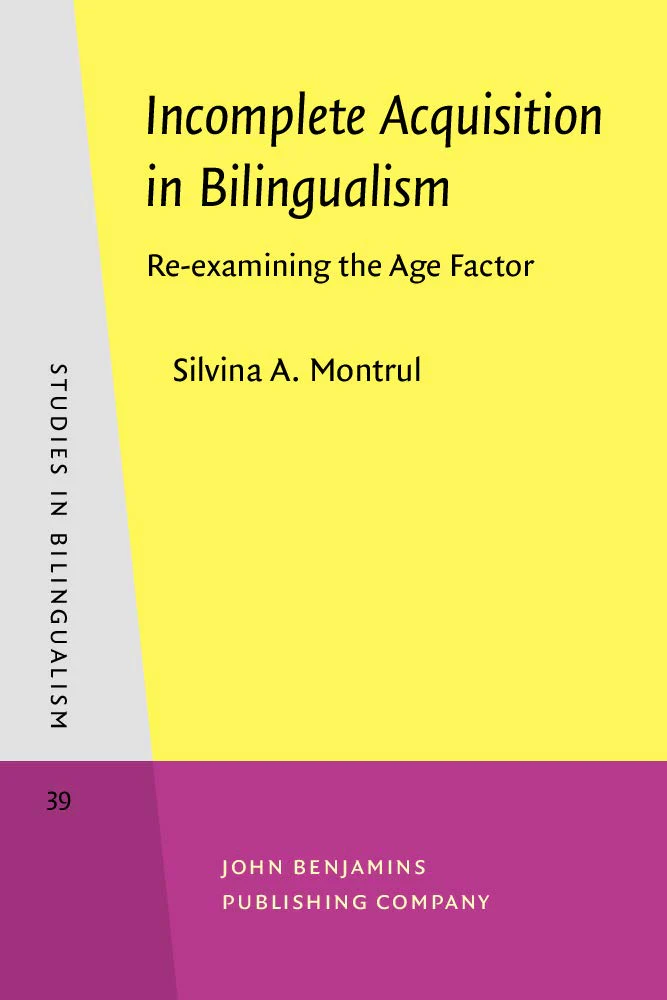
Age effects have played a particularly prominent role in some theoretical perspectives on second language acquisition. This book takes an entirely new perspective on this issue by reexamining these theories in light of the existence of apparently similar nonnative outcomes in adult heritage speakers who, unlike adult second language learners, acquired two or more languages in childhood. Despite having been exposed to their family language early in life, many of these speakers never fully acquire, or later lose, aspects of their first language sometime in childhood. The book examines the structural characteristics of incomplete grammatical states and highlights how age of acquisition is related to the type of linguistic knowledge and behavior that emerges in L1 and L2 acquisition under different environmental circumstances. By underscoring age of acquisition as a unifying factor in the study of L2 acquisition and L1 attrition, it is claimed that just as there are age effects in L2 a
Description
Age effects have played a particularly prominent role in some theoretical perspectives on second language acquisition. This book takes an entirely new perspective on this issue by reexamining these theories in light of the existence of apparently similar nonnative outcomes in adult heritage speakers who, unlike adult second language learners, acquired two or more languages in childhood. Despite having been exposed to their family language early in life, many of these speakers never fully acquire, or later lose, aspects of their first language sometime in childhood. The book examines the structural characteristics of incomplete grammatical states and highlights how age of acquisition is related to the type of linguistic knowledge and behavior that emerges in L1 and L2 acquisition under different environmental circumstances. By underscoring age of acquisition as a unifying factor in the study of L2 acquisition and L1 attrition, it is claimed that just as there are age effects in L2 a